Work in progress


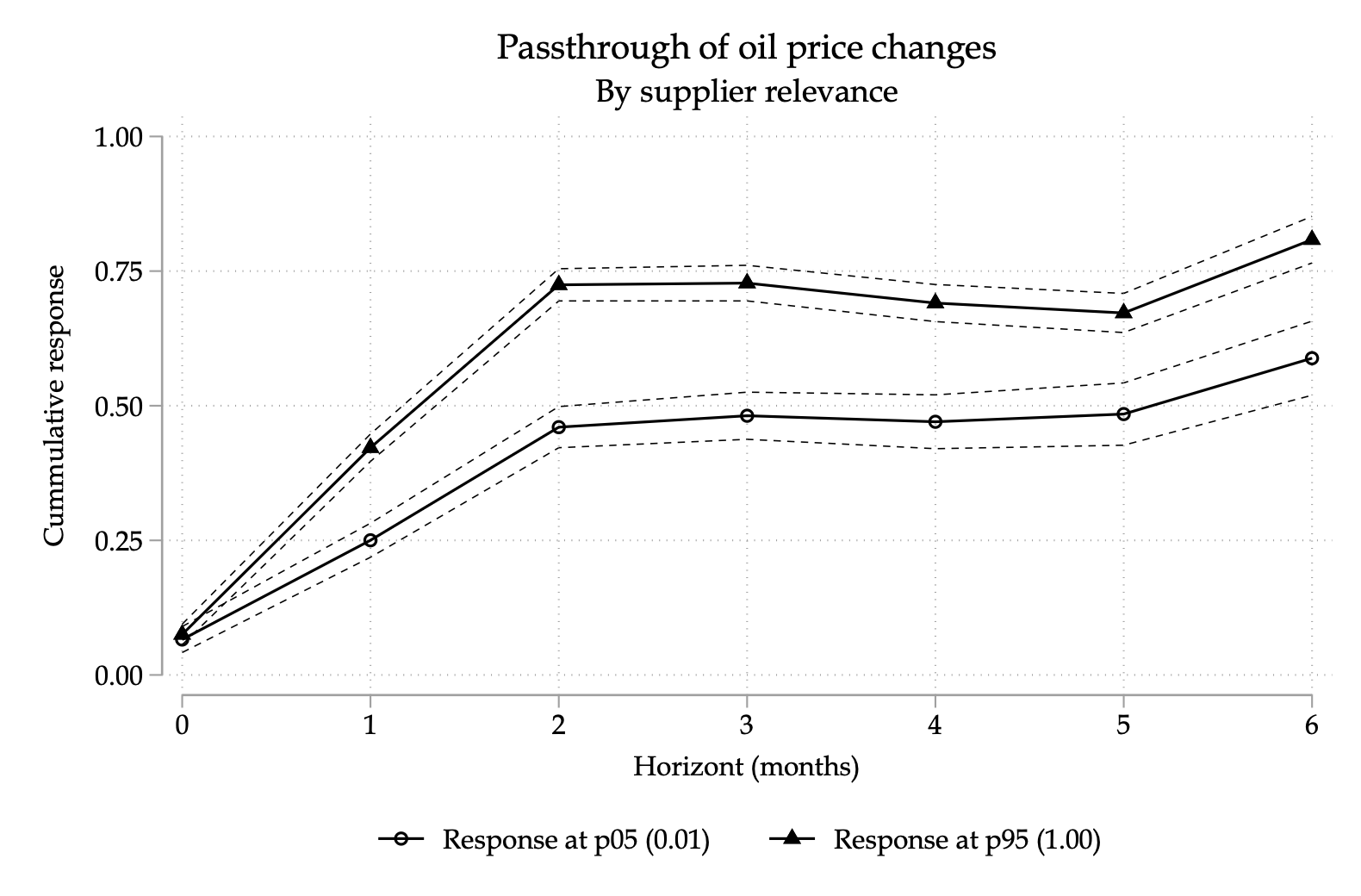
Pricing to Customers in Firm-to-Firm Relationships

with Luis Felipe Cespedes, Jorge Miranda-Pinto, and Javier Turen 

Abstract soon.

Firm Shocks, Workers Earnings and the Extensive Margin

[Under Review]

with Ana Sofia Leon and Matias Tapia 

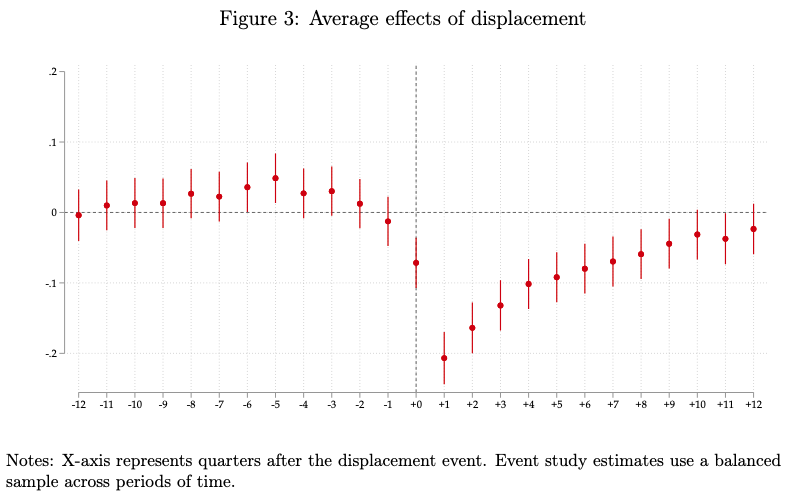
We study how idiosyncratic firm shocks transmit to workers' earnings through both the intensive and extensive margins of employment. Using a matched employer--employee census data for Chile between 2007 and 2019, we estimate the pass-through of firm productivity and sales shocks to the wages of stayers and the displacement risk and earnings losses of leavers. For continuing workers, earnings respond modestly to firm-level shocks, revealing partial wage insurance within firms. However, adverse shocks substantially raise displacement probabilities, and displaced workers suffer persistent earnings losses of 15-20 percent. Combining both margins, we show that the overall sensitivity of expected earnings to firm shocks nearly doubles relative to estimates based on stayers alone. These effects exhibit substantial heterogeneity. Young and short-tenure workers face higher displacement probability but minimal earnings losses upon displacement, while older and long-tenure workers are less likely to be displaced but experience larger and more persistent losses if displaced. Turning to stayers, lower-skilled and lower-ranked workers within firms receive more wage insurance, while higher-skilled and higher-ranked workers receive less wage insurance, except for top earners. Hence, firms appear to insure continuing employees only partially while transferring substantial risk through separations. We conclude that a comprehensive assessment of how firms transmit risk to workers must integrate both wage and employment adjustments.

Employer Competition, Earnings and Markdowns

with Alvaro Garcia-Marin and Matias Tapia 

Abstract soon.


Other work


Firewood certification programs: Key attributes and policy implications

[Undergraduate thesis]

with Manuel Barrientos Roberto Ponce, Ivan Herrera, and Felipe Vasquez
Energy Policy, February 2020.
 

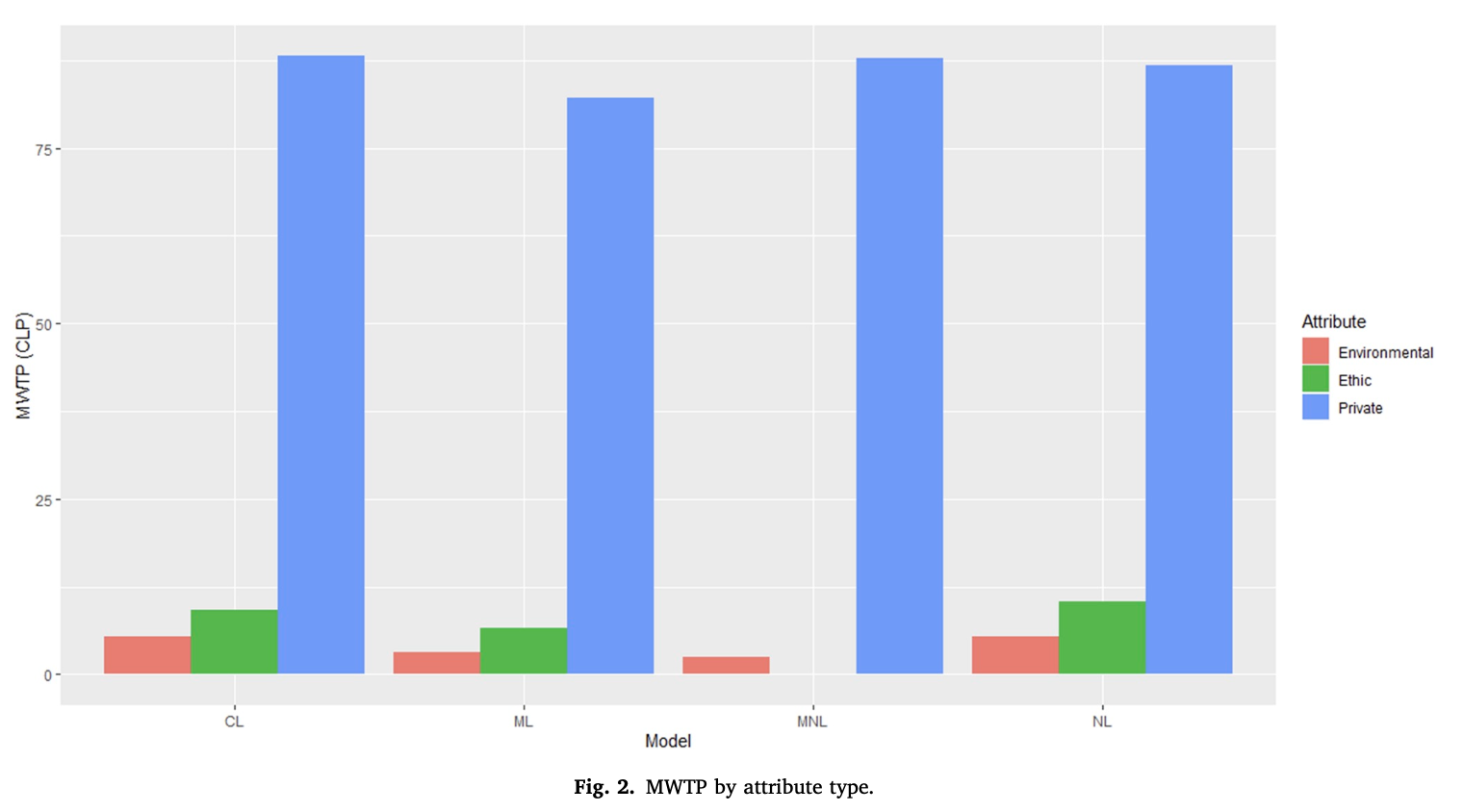
Evidence from south-central Chile shows that the concentration limits for PM10 and PM2.5, defined by both the World Health Organization and national standards, are systematically exceeded, affecting approximately 10 million people. Among the sources of this pollution, firewood use accounts for the largest share. This study assesses whether consumers value environmental, social, and legal attributes associated with the firewood certification programs. We used a discrete choice model based on a sample of 500 households. According to our results, the price premium for certified firewood is about 10% in the most likely scenario, with those attributes closely related to private benefits having a higher value, compared to those of social benefits. We identify significant heterogeneity among respondents belonging to two different consumer classes: 1) those who are less price sensitive and are willing to pay for attributes related to certification; 2) those who are sensitive to prices and are not willing to pay for attributes related to certification. Since the second class includes about 46% of the sample, the implementation of certification programs could be jeopardized. Therefore, knowing this information helps us determine whether a certification system can foster the firewood industry transition to a more sustainable model.


Research Assistant Experience


As a research assistant, I have contributed to several articles. Acknowledgements to my name can be found at: